
The building of Crossness Pumping Station
Photos reveal key moments of an ambitious engineering project that transformed London.
Three old photographic prints marked “Crossness” found within the postcards and ephemera section of a charity shop record the building of Sir Joseph Bazalgette’s revolutionary sewerage scheme for London’s Metropolitan Board of Works.
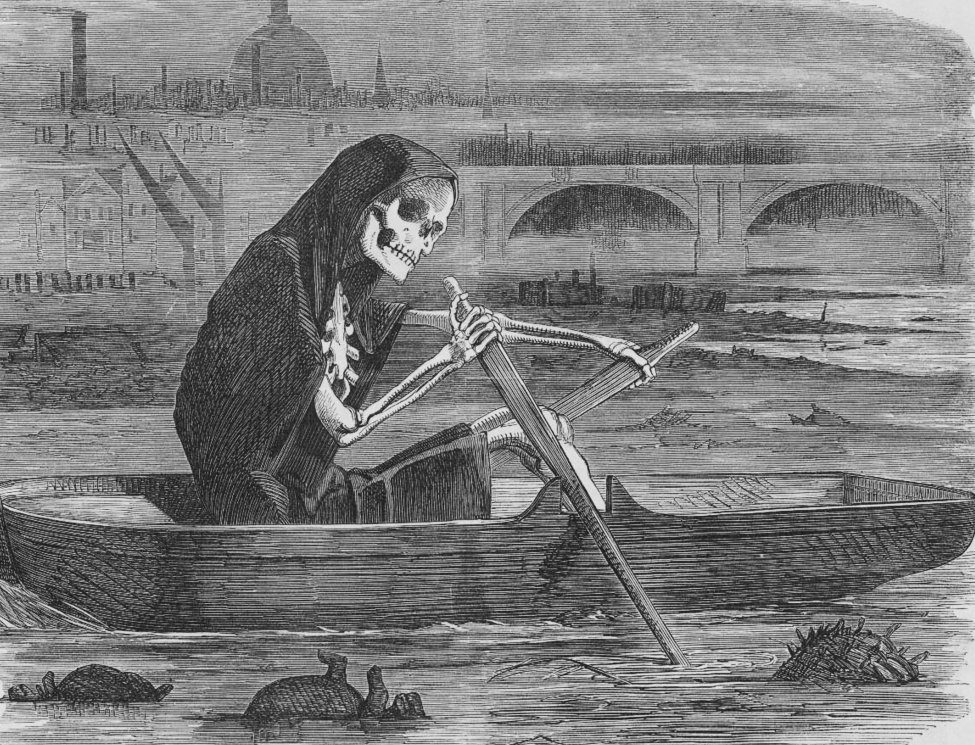
“The Silent Highwayman” (1858). Death rows on the Thames, claiming the lives of victims who have not paid to have the river cleaned up.
Cartoon from Punch Magazine, Volume 35 Page 137; 10 July 1858
Why was Crossness Pumping Station built?
The Great Stink was an event in central London during the summer of 1858. The River Thames, which flowed through the heart of the city, became overwhelmed by the human and industrial waste being dumped into it. The combination of hot weather and the sewage resulted in an overpowering smell that affected the entire city. This event was a major public health crisis and highlighted the urgent need for an improved sewer system.
Sir Joseph William Bazalgette was a civil engineer who played a critical role in addressing the city’s sanitation issues. Born in 1819, he joined the Metropolitan Board of Works and was tasked with designing a new sewer system for London.
The Crossness Pumping Station was built between 1859 and 1865. It was part of Bazalgette’s ambitious project to create a modern sewer system for London. The station officially opened on April 4, 1865, and played a crucial role in managing the city’s sewage and improving public health.
The Crossness photographs
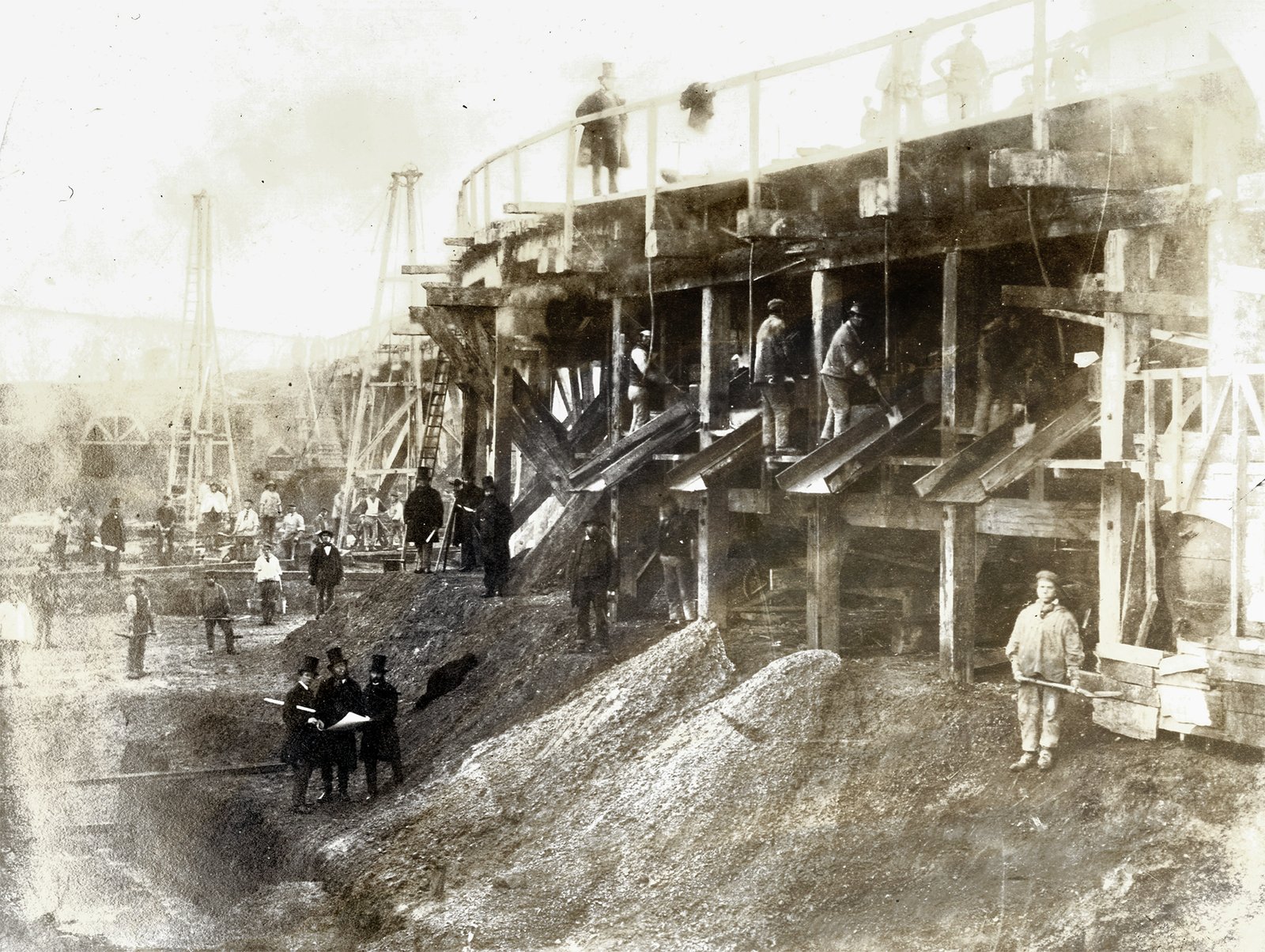
Construction of London’s sewage system at an unknown location.
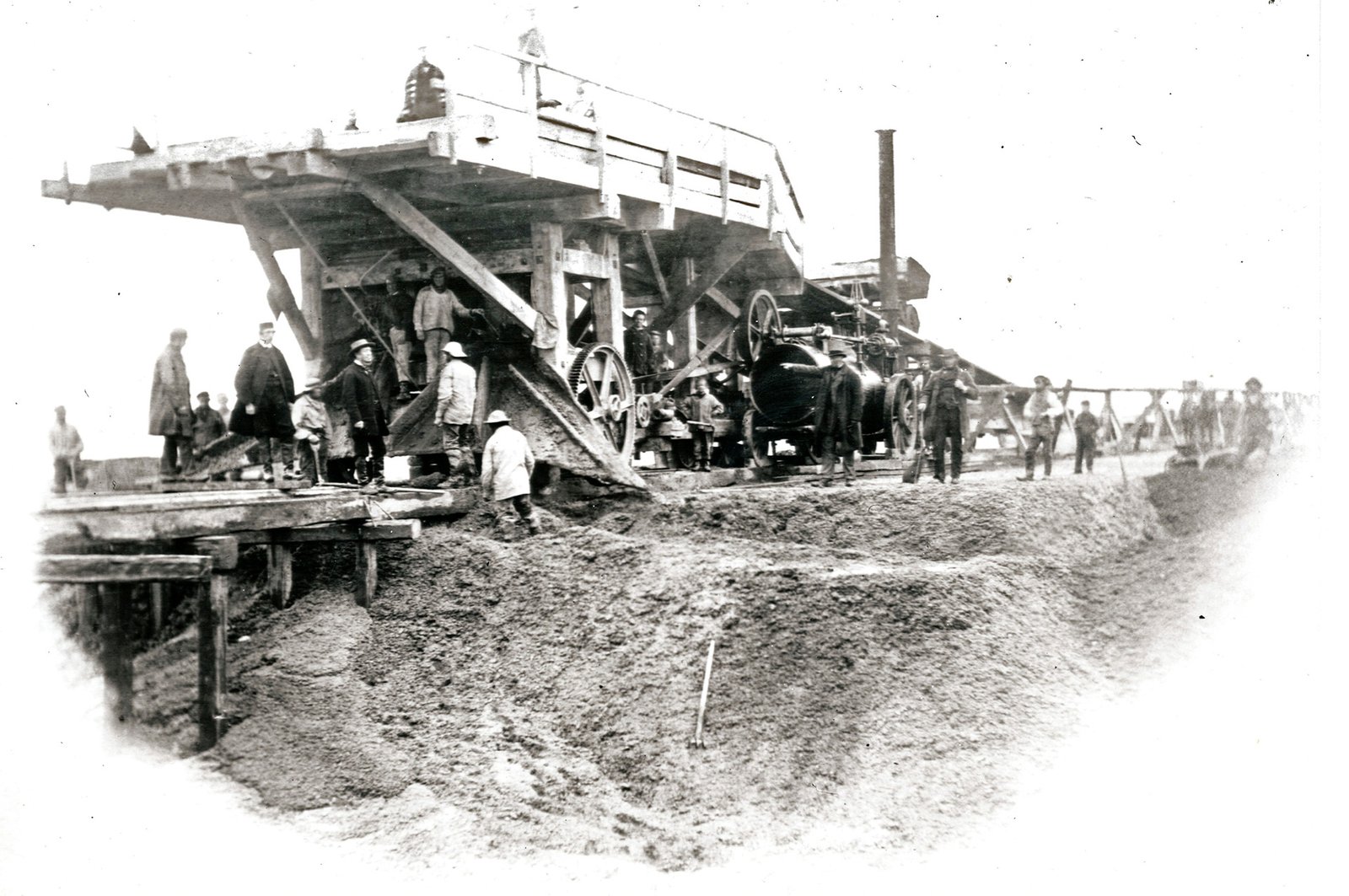
Construction underway during the early 1860s at an unknown loction.
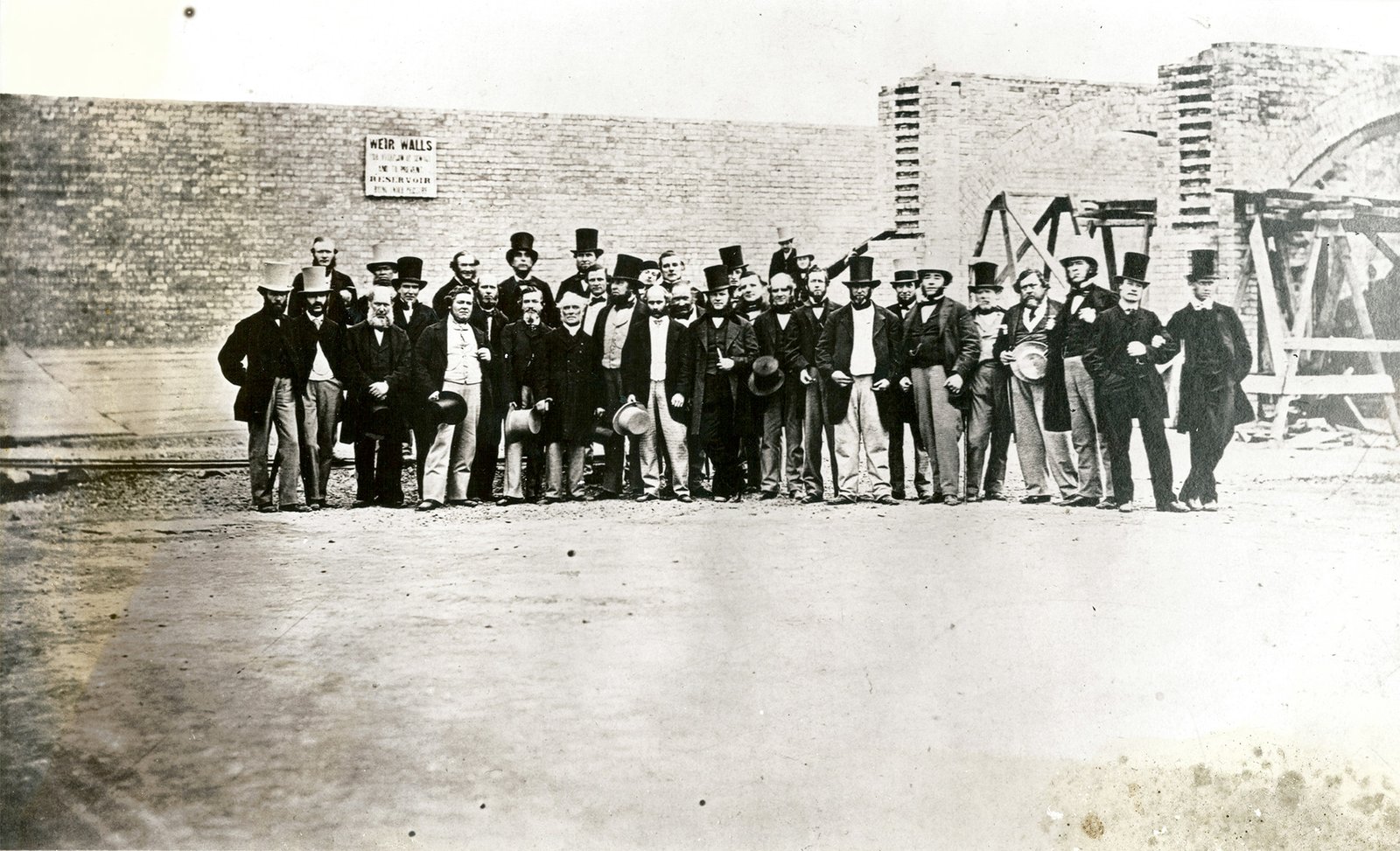
Group photograph of Joseph Bazalgette, engineers and VIPS at Crossness Pumping Station, Bexley. The sign on the wall says, “Weir walls for overflow of sewage and to prevent reservoir being under pressure.” This view has featured in other archival photographs of the building and opening of this facility.

Help reunite history
These may well be duplicates of material held in existing collections, but if not we will be providing these images to Crossness Engines Trust and Historic England. Please let us know if you can contribute to this story and provide more details on the images, particularly with dating and the subjects captured. We love a rabbit hole too, so we’re very happy to include links to sites that relate to this story.